
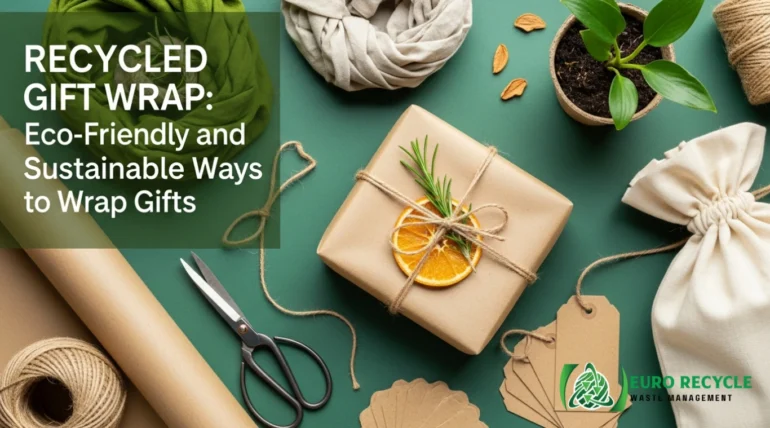
Recycled gift wrap has become a practical solution for people who want to reduce waste without compromising how their gifts look. Traditional wrapping paper often includes plastic coatings, glitter, or metallic layers. These materials cannot be recycled and usually end up in a landfill after one use.
Choosing recycled and eco-friendly gift wrap allows you to reduce waste, protect recycling systems, and make more conscious choices during holidays and celebrations. This guide covers recycled wrapping paper, reusable gift wrap, plastic-free decorations, and zero-waste wrapping ideas that work in real life.
Why Recycled Gift Wrap Matters
Gift wrapping waste increases significantly during holiday periods. Many people assume wrapping paper is recyclable, but much of it is not. When non-recyclable materials enter recycling streams, they contaminate the entire process.
- Recycled gift wrap helps you
- Reduce landfill waste
- Lower demand for virgin paper
- Protect recycling systems
- Support sustainable production practices
Small changes in how you wrap gifts can have a measurable impact when repeated year after year.
Understanding Recycled Wrapping Paper
Recycled wrapping paper is made from post-consumer waste such as newspapers, cardboard, and office paper. It is designed to be recycled again after use when free from plastic coatings.
- When choosing recycled wrapping paper
- Look for matte finishes
- Avoid glitter or foil
- Check for water-based or soy-based inks
- Choose minimal designs over heavy printing
This ensures the paper can re-enter recycling systems without causing contamination.
Best Recycled Gift Wrap Ideas
Kraft Paper
Kraft paper is one of the most reliable sustainable wrapping ideas. It is recyclable, biodegradable, and strong enough for reuse. Its neutral colour makes it easy to decorate using natural gift decorations or reusable ties.
Newspaper and Magazine Pages
Newspapers and magazines provide an effective recycled gift wrap option. Comic pages, illustrated spreads, or themed sections add personality and reduce waste at the same time. This method works especially well for small to medium-sized gifts.
Recycled Paper Gift Wrap
Many retailers now offer recycled wrapping paper made entirely from post-consumer materials. These papers are festive, durable, and recyclable when used correctly. Always remove tape and labels before recycling.
Reusable Gift Wrap for Long-Term Use
Fabric Gift Wrapping
Reusable gift wrap made from fabric is one of the most effective zero-waste wrapping methods. Scarves, tea towels, pillowcases, or fabric offcuts can all be used repeatedly. Fabric wrapping also adds practical value to the gift itself.
Furoshiki Wrapping
Furoshiki wrapping is a traditional Japanese method that uses cloth to wrap gifts securely without tape. It works well for irregular shapes and completely removes single-use packaging from the process. This method is reusable, elegant, and environmentally responsible.
Reusable Gift Bags
Cloth gift bags made from organic or recycled fabrics can be used year after year. They are suitable for storage, shopping, or future gifting and help reduce reliance on disposable paper.
Plastic Free Gift Wrap Decorations
Natural Gift Decorations
Natural gift decorations such as dried flowers, pinecones, leaves, cinnamon sticks, and twigs add texture without harming recycling systems. These materials are compostable and widely available.
Twine and Natural Ribbons
Replace plastic ribbon with jute twine, hemp cord, or cotton ribbon. These materials are biodegradable and can be reused multiple times.
Wooden Tags and Paper Labels
Wooden tags and recycled paper labels replace plastic-coated tags and stickers. They can be reused or recycled easily and add a clean finish.
How to Wrap Gifts Without Boxes
Not all gifts require boxes. Wrapping without boxes reduces waste and material use.
- Use fabric wraps for clothing or soft items
- Wrap items inside baskets, tins, or jars that can be reused
- Use scarves or cloths to secure awkward shapes
These methods reduce packaging while keeping gifts presentable.
How to Avoid Contaminating Recycling Streams
Even eco-friendly gift wrap can become a problem if handled incorrectly.
Follow these rules:
- Remove all tape, ribbons, and labels before recycling
- Avoid glitter, foil, and laminated paper
- Do not mix fabric or plastic with paper recycling
- Check local recycling guidance when unsure
If an item cannot be recycled, reuse it instead of discarding it.
- Zero Waste Wrapping Tips You Can Reuse Every Year
- Keep a small wrapping kit with reusable materials
- Store twine, tags, and fabric wraps for future use
- Use old maps, posters, or calendars as gift wrap
- Choose experience-based gifts when possible
These habits reduce waste beyond one season.
Before You Wrap
If you want to wrap gifts more responsibly year after year, save this guide and return to it before your next celebration.
Recycled gift wrap offers a realistic way to reduce waste while maintaining thoughtful presentation. By using recycled wrapping paper, reusable gift wrap, and plastic-free decorations, you support sustainability without adding complexity.
Sustainable wrapping is about consistency, not perfection. Each small choice contributes to a larger reduction in waste over time.
FAQs
Q1. What is the most sustainable gift wrap?
Recycled paper without plastic coatings and reusable fabric wraps are the most sustainable options.
Q2. Can recycled wrapping paper be recycled again?
Yes, if it contains no glitter, foil, or laminated layers.
Q3. What is the easiest reusable gift wrap option?
Cloth gift bags or scarves are simple and adaptable for most gifts.
Q4. Is furoshiki wrapping suitable for beginners?
Yes. Basic folds are easy to learn and work for everyday gifting.
Q5. Does eco-friendly gift wrap look less festive?
No. Natural decorations often create a cleaner and more elegant appearance.
Final Thoughts on Recycled Gift Wrap
Recycled gift wrap is not a trend or a seasonal idea. It is a practical habit that reduces waste every time you give a gift. By choosing recycled wrapping paper, reusable gift wrap, and plastic-free decorations, you protect recycling systems and reduce unnecessary landfill.
This guide gives you a clear framework you can return to year after year. Use it to make better wrapping choices, share it with others, and gradually build more sustainable gifting habits that last beyond one holiday.
