
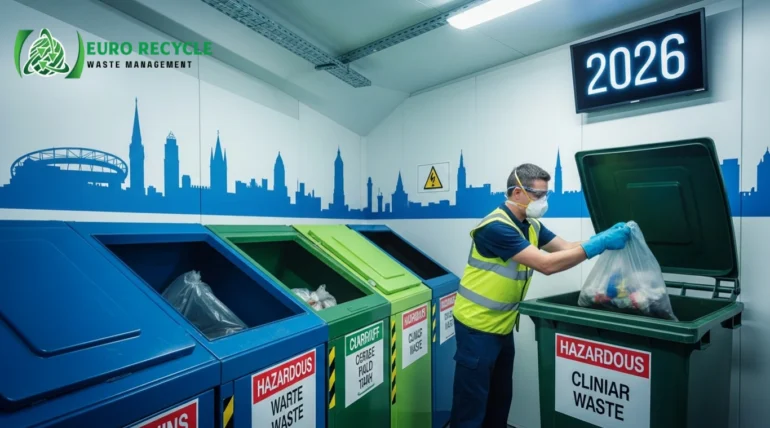
Clinical Waste Disposal Cardiff: Business Guide 2026
As 2026 approaches, waste compliance is becoming a serious operational priority for Cardiff businesses, not just an environmental concern. For organisations that produce clinical or hazardous waste, incorrect handling can result in legal penalties, reputational damage, and severe health risks for both staff and clients.
Local businesses such as medical clinics, dental practices, laboratories, gyms, and hair & beauty salons must now operate under tighter environmental controls and clearer accountability. This definitive guide explains what compliant clinical waste disposal Cardiff services involve in 2026 and how local enterprises can manage their duty of care effectively.
What Is Clinical and Hazardous Waste?
Clinical and hazardous waste refers to materials generated during healthcare or aesthetic treatments that may pose a specific risk to human health or the surrounding environment. Common examples include:
- Sharps: Medical needles, syringes, lancets, and surgical blades.
- Contaminated Items: Blood-stained dressings, swabs, and used PPE.
- Chemical Refuse: Laboratory residues, diagnostic reagents, and specialist chemical containers.
- Aesthetic Waste: Waste from microblading, piercings, and cosmetic injections.
These specialized materials cannot legally be discarded through standard commercial waste bins or public recycling channels.
Which Cardiff Businesses Are Affected?
If your commercial operations involve human health, body care, or physical fitness, you are highly likely to produce clinical waste streams. Key sectors include:
1. Medical Clinics & GP Practices
Facilities handling routine diagnostics must strictly isolate sharps containers, contaminated PPE, and infectious diagnostic materials.
2. Dental Practices
Dental offices routinely generate amalgam waste, used chemical instruments, and blood-contaminated cotton items that require specialised disposal pathways.
3. Hair, Beauty & Tattoo Salons
Aesthetic treatment needles, microblading waste, chemical product containers, and piercing equipment must be safely segmented at the point of origin.
4. Gyms & Fitness Centres
High-traffic fitness hubs must responsibly handle first-aid waste, sharps from diabetic clients, and blood-contaminated sanitising wipes.
What a Compliant Clinical Waste System Includes
Operating a legally compliant framework requires more than just buying specialized bins. A professional, certified waste protocol must actively provide:
- Colour-Coded Segregation: Utilizing orange, yellow, and tiger bags alongside yellow sharps bins to classify waste types correctly.
- Scheduled Licensed Collection: Timely pickups executed exclusively by an Environment Agency licensed waste carrier.
- Duty of Care Documentation: Receiving proper Waste Transfer Notes (WTN) or Hazardous Waste Consignment Notes for every batch removed.
- Safe Audited Disposal: Verified treatment, autoclaving, or incineration routes at authorized UK facilities.
Risks of Incorrect Clinical Waste Disposal
Improper handling or mixing clinical waste with standard business refuse carries severe consequences in 2026:
- Heavy Financial Penalties: Local council fines and environmental enforcement notices.
- Licence Suspension: Regulated sectors can face immediate suspension of operational business licences.
- Legal Prosecutions: Serious breaches of UK Duty of Care regulations can lead to criminal prosecution.
- Brand Reputation Damage: Loss of vital client trust and long-term insurance complications.
FAQ: Compliant Waste Management
Q1. What exactly counts as commercial clinical waste?
Clinical waste includes any material that poses a biological or chemical risk to health, such as used sharps, blood-soiled dressings, contaminated PPE, and chemical biohazard waste generated during commercial operations.
Q2. How should my business store clinical waste before collection?
Clinical waste must be segregated at the source of origin. It should be kept in approved, puncture-proof sharps containers or legally color-coded clinical waste bags stored in a secure, locked area.
Q3. Do Cardiff beauty salons legally need sharps disposal systems?
Yes. Any salon offering microblading, dermal fillers, tattoos, or piercings must legally use approved yellow sharps containers and hire a licensed provider for safe disposal.
Q4. What documentation must a licensed carrier provide?
Your waste carrier must legally provide a Waste Transfer Note (WTN) or a Hazardous Waste Consignment Note. You are legally required to keep these compliance records on file for a minimum of 2 to 3 years.
Final Thoughts
Clinical waste disposal is no longer a background administrative task; it is a core legal responsibility for regulated businesses in Cardiff. By setting up a compliant system, you proactively safeguard your staff, your clients, and your corporate future.
Need a fully legal, affordable waste management strategy tailored to your business needs? Save time and avoid heavy council penalties by checking our dedicated commercial waste disposal services. Contact our licensed team today for a custom quote.
